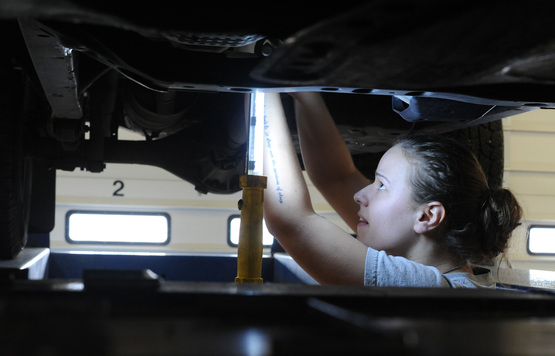








Fuel Injection: It Keeps Getting Better for Walled Lake Drivers
March 24, 2019
Walled Lake residents know that engines need to burn fuel to operate. Fuel is pumped from your fuel tank to your vehicle engine where it is squirted—or injected—into your engine's cylinders. This is the function of the fuel injectors.
There are two ways to inject fuel into an engine. Fuel needs air to burn, so in the first method, fuel is injected into a port and allowed to mix with air—before it is drawn into the cylinders. In the second method, fuel is injected directly into the cylinders and mixes with air after it enters the vehicle engine.
Direct injection engines burn fuel more efficiently than conventional vehicle engines. Some models can deliver the power of a V8 with the economy of a V6.
For example, in one family of engines, the conventional version (a V6) delivers about 250 horsepower. The direct injection version delivers over 300 horsepower and gets about the same gas mileage. The turbocharged version delivers 350 horsepower.
Why the big difference in power? Direct injection systems allow fuel to be squirted into the vehicle engine at hundreds of times the pressure of a conventional engine. This atomizes the fuel better (breaks it down into tinier droplets), which means more of it gets burned, which translates to more power for your engine. It also results in cleaner emissions.
Fuel injectors are precision instruments. They have to deliver the right amount of fuel at exactly the time the vehicle engine needs it. They are also engineered to inject fuel with a specific spray pattern. This spray pattern allows for maximum fuel efficiency and proper atomization. Direct injection engines require a much higher degree of precision than conventional engines. For this reason, they are equipped with more sophisticated computers.
When fuel injectors get dirty, their precision drops off. The spray pattern won't be precise, and the timing of fuel delivery may be off. This decreases fuel efficiency and fuel economy as well as delivering less power to the engine.
Walled Lake residents should understand that fuel injectors are not cheap to replace. Direct injection fuel injectors are even more . And we're talking a mortgage payment to buy a set of new fuel injectors for a diesel engine.
So keeping your fuel injectors clean is just good auto advice. The best way to do this is to change your air and fuel filters regularly and practice other habits of good vehicle care and preventive maintenance. Cleaning additives in your fuel can also help.
If you do end up with gum or varnish in your fuel system, you'll need a professional fuel system cleaning. This will clean out your whole system, including the injectors. The good news is that with proper maintenance, Walled Lake drivers will enjoy better fuel economy and their fuel injectors will last for a long time.
Contact us for more tips to help you improve your performance and safety.
ABC Auto Works
127 E. Walled Lake Drive
Walled Lake, Michigan 48390
800-742-4511
Need Service?
More articles from ABC Auto Repair & Tire Center
Smooth Moves
September 13, 2026
Stop for a moment and think of whats holding that heavy engine that sits under your vehicles hood to your vehicles frame. Your engine weighs hundreds of pounds, so its a big burden on those things that are holding it in place. Same is true for what holds your vehicles transmission in place. The... More
Helping Your Engine Breathe Easier
September 6, 2026
You may have heard someone tell you its time to replace your vehicles engine air filter and thought, Its OK. Ill do it in a while. While its tempting to put that off, keep in mind that having your engine air filter replaced is one of the easiest ways to maintain your vehicles performance and ef... More
Smooth Operator
August 30, 2026
Were used to bringing a vehicle to a stop and hardly noticing the engines even running when were sitting still. But sometimes you might notice it running rough when youre idling. Your vehicle is shaking, vibrating and making sputtering noises. You may even notice the tachometer on your instrum... More