






Beware of Potholes! (Avoiding Pothole Damage)
January 1, 2022
You may live in a region where roads become pockmarked with craters known better as potholes. They're caused by moisture seeping through a compromised road surface that can freeze, expand and literally punch holes in the road. And when your vehicle hits one of those holes that's big enough, the impact can flatten a tire, bend a wheel or tear apart a suspension component.
To minimize pothole damage, leave enough room between you and the vehicle in front of you so you can see the road surface and any upcoming potholes. That way you'll have time to slow down and steer around them. Also, if you see what looks like a puddle of water, it may be hiding a pothole underneath, so treat it as if was a pothole.
If you keep your tires inflated to the manufacturer's specifications, they're more likely to withstand hard impacts. And the slower you're going when you hit a pothole, the less likely you are to break something. But if you do find you've hit a pothole pretty hard, here are some signs to watch out that could signal damage.
- Your vehicle pulls to one side
- The steering wheel shakes
- You hear noises or clunks coming from your suspension
- Your steering wheel is not centered when you are going straight
These are all symptoms you should have checked at your vehicle repair facility as soon as you can. The longer you wait, the more damage you may be doing.
You also may find after hitting a pothole hard that the tire on that wheel is flat. Try not to drive any more on that tire since you could do a lot more damage to the tire and/or wheel. A call to roadside assistance may save you money in the long run by limiting the damage to what's already done.
ABC Auto Works
127 E. Walled Lake Drive
Walled Lake, Michigan 48390
800-742-4511
Need Service?
More articles from ABC Auto Repair & Tire Center
That Clunk Isn’t Normal: Why Your U-Joints Need Lubrication (Lubricate U-Joints)
July 26, 2026
If youve noticed a clunk when shifting from park to drive, accelerating from a stop or letting off on your accelerator, it may be your vehicle warning you about dry or failing U-joints. Those are small, critical components in your drivetrain that allow the driveshaft to flex as your suspension mo... More
Timing Cover Replacement
July 19, 2026
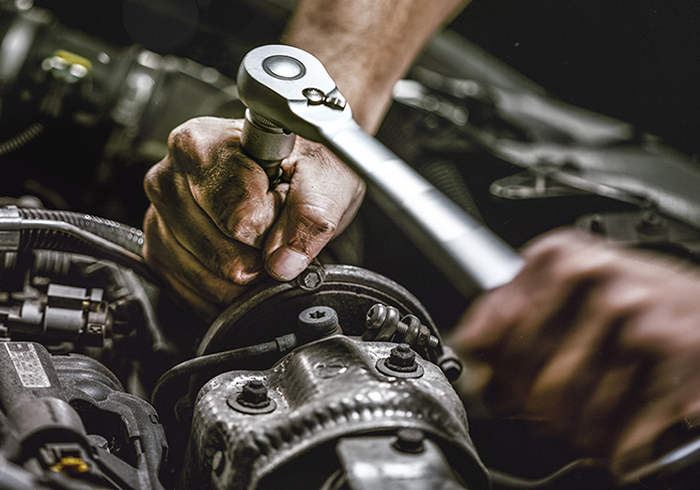
Your engine has a lot of parts that need to work in harmony in order to keep you powering down the road. Some of those parts need to be protected in order to keep things running smoothly, and one that does the job is called a timing cover. It is in the front of your engine and shields components... More
Cabin Air Filter Replacement
July 12, 2026
How many times have you heard, You should replace your cabin air filter, and decided, Ill do it later. You might think twice when you consider a new filter can help maintain and improve the quality of the air youre breathing inside your vehicle. What you also might not know is it a clean cabin ... More